
Wisconsin has some incredible natural landscapes, from the dense pine forests to the rolling oak savannas in the south. But as any local property owner knows all too well, nature never stops growing. If left ignored for just a few years, a perfectly good lot can turn into a jungle of overgrown brush, tangled vines, and aggressive weeds. Overgrown land is not just an eyesore. It limits how you can use your property and creates a perfect breeding ground for ticks and pests.
When you finally decide to reclaim that land, whether you are prepping a site for a new cabin or just trying to restore your backyard, the traditional approach has always relied on brute force. For decades, default land clearing meant bringing in heavy bulldozers, tearing the earth apart, and managing massive smoldering burn piles. Today, there is a vastly superior, eco-friendly, and cost-effective alternative.
Forestry mulching has completely changed the game for property management. By using specialized machinery to grind vegetation right where it stands, this method gets the job done faster and leaves the land in much better condition. Here is a closer look at how the process works, why it beats traditional bulldozing, and why it is the smartest way to clear brush in Wisconsin.
What Exactly is Forestry Mulching?
Forestry mulching is a land clearing method that uses a single machine to cut, grind, and clear vegetative growth. Instead of relying on a whole fleet of excavators, dump trucks, and wood chippers, this process typically relies on a high-flow track loader or an excavator equipped with a specialized rotary mulching head. This heavy-duty steel drum is covered in carbide-tipped teeth that spin at thousands of revolutions per minute.
As the machine drives forward, the spinning drum shreds heavy brush, small trees, and stumps in a matter of seconds. It turns them into a layer of wood chips left directly on the forest floor. It is a seamless single-step process. The vegetation is cut down, chipped, and dispersed all at once.
The Problem with Traditional Bulldozing
To understand why forestry mulching is such a massive upgrade, you have to look at the collateral damage caused by traditional clearing. Historically, clearing a wooded lot meant bringing in a bulldozer to perform “root raking.” This involves literally pushing a massive metal blade through the topsoil to tear brush and trees out by their roots. While this method technically gets the vegetation out of the way, it creates new headaches.
- Severe Soil Disturbance: Bulldozers do not just remove brush. They scrape away the top layer of earth. This strips the land of its most fertile topsoil and leaves behind a scarred, compacted, and barren landscape that can take years to recover.
- The Nightmare of Debris Disposal: A bulldozer leaves you with huge piles of twisted roots, dirt, and splintered branches. You then face expensive options like paying exorbitant trucking fees to haul it away to a landfill or burning it on site. In Wisconsin, burning requires permits, strict weather windows, and constant monitoring to prevent wildfires. Plus, the smoke will undoubtedly irritate your neighbors.
- Damage to Trees: The heavy treads of a bulldozer cause severe soil compaction. This crushes the delicate root systems of the mature trees you actually want to save. A beautiful oak tree might look completely fine the day after a bulldozer leaves, but that unseen root damage can slowly kill the tree over the next few years.
- High Costs and Long Timelines: Traditional clearing requires multiple machines, multiple operators, hauling fees, and days or weeks of hard labor.
The Top Benefits of Forestry Mulching
By eliminating the need to tear up the soil or haul away debris, forestry mulching solves almost every problem associated with old-school land clearing. Here is why it is the best choice for Wisconsin properties.
Nutrient Cycling: Feeding the Soil Naturally
One of the most profound benefits of forestry mulching is what it leaves behind. Instead of stripping the land of its organic material, this process returns it directly to the earth.
The shredded brush creates a rich, biodegradable layer of mulch. As this natural material decomposes over time, it reintroduces essential nutrients like carbon, nitrogen, and phosphorus back into the soil.
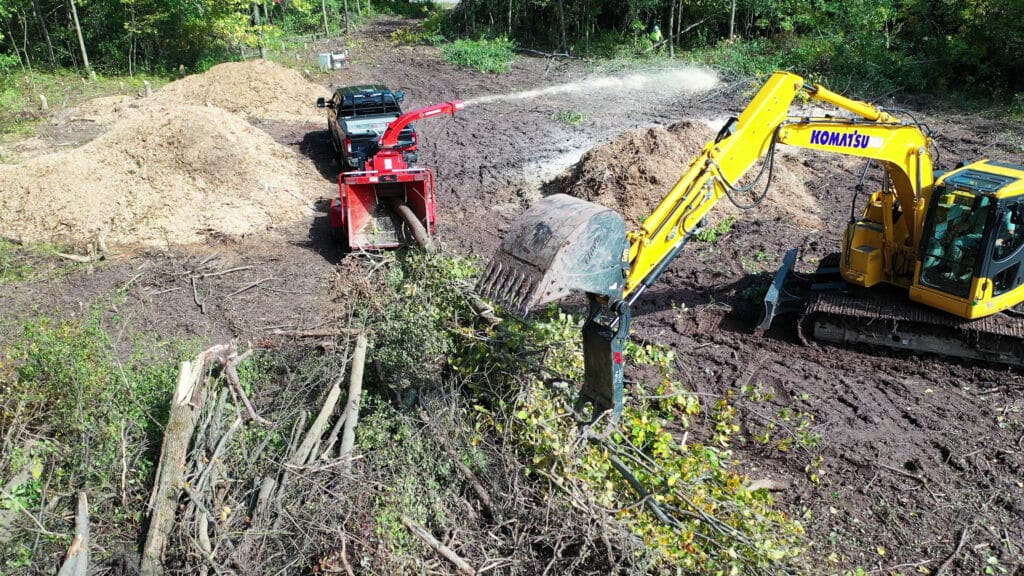
Furthermore, this mulch layer acts as a natural insulator. During hot and dry Wisconsin summers, the mulch traps moisture in the ground and prevents the soil from drying out and cracking. You are essentially turning unwanted brush into free, high-quality compost that promotes a healthier ecosystem for your remaining trees and native plants.
Note: Mulching is particularly beneficial in areas with poor or sandy soil, like parts of Central Wisconsin, because the added organic matter dramatically improves soil health over time.
Immediate Erosion Control
Wisconsin is defined by its water. From the Great Lakes to thousands of inland lakes, rivers, and streams, water quality is a major priority. The Department of Natural Resources strictly regulates agricultural and residential runoff to protect these waterways from sediment pollution.
Traditional bulldozing leaves bare dirt completely exposed to the elements. When heavy spring rains or rapid snowmelts hit, that loose dirt immediately turns into a mudslide that washes valuable topsoil into local lakes and storm drains. This is especially risky in the hilly Driftless Area in the western part of the state.
Forestry mulching is widely considered the most environmentally responsible land clearing method because it offers built-in erosion control. By grinding the brush above ground, the root structures are left completely intact beneath the surface. They act like a structural net that holds the earth together. Above ground, the fresh layer of wood chips absorbs the impact of heavy rain, slows down water runoff, and acts as a filter to trap sediment before it can wash away.
Tackling Wisconsin Invasive Species
Property owners across the Midwest are locked in a constant battle against invasive species, particularly Common Buckthorn and Honeysuckle. These aggressive plants form dense canopies that choke out sunlight, prevent native wildflowers and oak saplings from growing, and ultimately ruin wildlife habitats.
Because forestry mulching grinds the plant material all the way down to the stump, it is an incredibly effective first step in invasive species management. While chemical treatment or ongoing mowing is usually required to prevent buckthorn from resprouting, mulching instantly reclaims the physical space. It opens up the forest canopy to let sunlight reach the forest floor. Once the thickets are gone, follow-up treatments become vastly easier and more manageable.
Unbeatable Cost and Time Efficiency
Time is money, and coordinating traditional land clearing can be a logistical nightmare. Between organizing excavators, scheduling dump trucks, waiting for ideal burn weather, and grading the torn-up soil, a traditional clearing project can drag on for weeks. Forestry mulching operates on a radically different timeline.
Because there is no debris to haul, no dirt piles to grade, and no fires to manage, a forestry mulcher can often clear an acre of dense brush in a single day. You are paying for one machine and one operator. Once the machine drives off the trailer, the work begins. Once it drives away, the job is completely finished. The land is immediately ready to be walked on, seeded, or built upon.
Ideal Applications for Forestry Mulching in Wisconsin
Because of its versatility and low environmental impact, forestry mulching is the preferred method for a wide variety of property management projects.
- Hunting Property Management: White-tailed deer thrive in edge habitats, but they avoid impenetrable brush. Mulching is perfect for cutting shooting lanes, creating quiet ATV access trails, and clearing open pockets for food plots without spooking wildlife with weeks of loud construction.
- Real Estate Preparation: If you are selling a wooded lot, buyers need to walk the property to visualize their future home. Mulching instantly increases curb appeal and property value by turning a wild jungle into an accessible, inviting landscape.
- Property Line and Fence Clearing: Reclaim your boundaries easily. Mulchers can travel down narrow property lines to chew up the decades of growth that typically swallow up old farm fences.
- Pasture Reclamation: Over time, active pastures can be slowly overtaken by thorny brush, cedar saplings, and weeds. Mulching allows farmers and equestrians to reclaim grazing acreage quickly without destroying the underlying pasture grass.
The Smartest Way to Manage Land
When it comes to managing overgrown land in Wisconsin, the days of ripping up the earth with bulldozers are rapidly becoming a thing of the past. Forestry mulching represents the modern, intelligent approach to land management. It is faster, more economical, and vastly superior for the long-term health of the environment.
By choosing to mulch rather than bulldoze, you actively prevent topsoil erosion, protect the root systems of your most valuable trees, and return essential nutrients directly back into the earth. Whether you are looking to clear a path to the lake, clean up a sprawling hunting property, or just make your backyard usable again, forestry mulching is undoubtedly the smartest way to clear the way.