
Site Preparation
Let us help you prepare your site accordingly for other construction activities to commence. We will set the tone correctly so the rest of the project goes smoothly.
Site preparation is always the first phase of any major construction or forestry project. This process involves clearing the land of trees and debris, leveling the ground for building, and moving materials to and from the site.
The benefits include: Removing obstructions makes the rest of the job easier. Increasing ease of access to the site for all the necessary workers and laborers. Clearing out the site removes these obstructions that might slow down further progress Site Clearing. Clearing the site is the very first step in site preparation. Site Surveying. You might not be sure if you are building on the right block if survey pegs do not determine the building block.
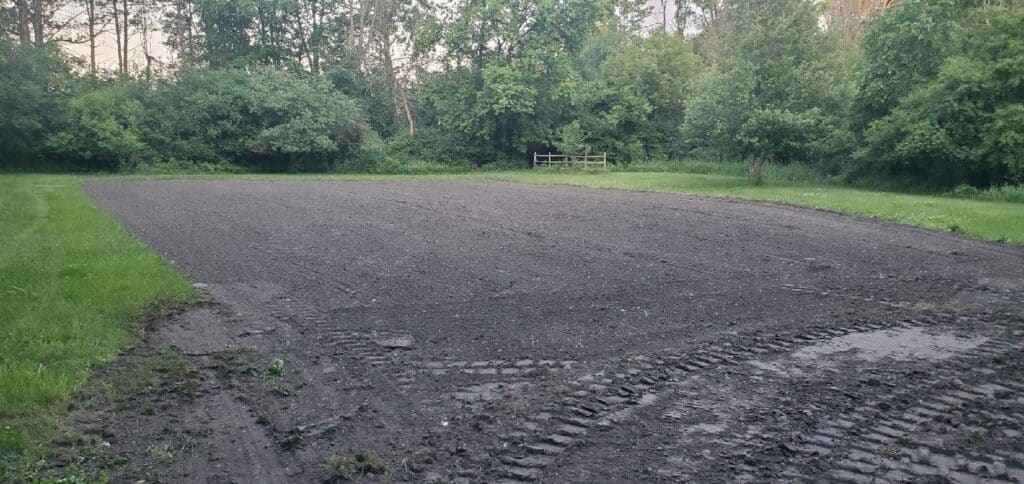
We are here to help get your land ready for:
Construction
Proper site preparation is the foundation of every successful construction project, and getting it right from the start saves time, money, and headaches down the road. At Wisconsin Land Management, we specialize in readying your land so that construction crews can move in and get to work without delay.
Before a single footing is dug or a foundation poured, the ground beneath your project needs to be properly cleared, graded, and stabilized. Our team handles every step of that process. We remove trees, stumps, brush, and debris that would otherwise interfere with building activity. We then grade and level the terrain to create a stable, even surface suited to your specific structure, whether that’s a residential home, commercial building, or agricultural facility.
From there, we address the finer details that keep a job site running efficiently: establishing temporary driveways for contractor access, installing silt fencing and silt socks to manage stormwater and erosion, and coordinating the trucking of materials in and out of the site. We also perform soil compaction to ensure the ground can bear the load of your structure safely and meet local code requirements.
Digging Footings
Footings are the unsung heroes of any structure. They are hidden beneath the surface, yet responsible for carrying the entire load of whatever is built above them. At Wisconsin Land Management, we understand that digging footings isn’t just about moving dirt. It’s about precision, depth, and doing the job right the first time.
Before any digging begins, our team assesses the soil conditions and consults the project’s structural requirements to determine the correct footing dimensions and depth. In Wisconsin, frost depth is a critical factor; footings must be dug below the frost line, typically 48 inches or more, to prevent the ground’s freeze-thaw cycles from shifting or cracking your foundation over time.
Using professional-grade excavation equipment, we dig footing trenches cleanly and accurately, maintaining consistent width and depth throughout. Proper trench walls ensure that concrete pours evenly and cures with the structural integrity your project demands. We also take care to keep the trench floor compacted and free of loose material, which can compromise the footing’s load-bearing capacity.
Building Pads
A building pad is one of the most critical elements of any construction project, yet it often doesn’t get the attention it deserves. Simply put, a building pad is a precisely leveled and compacted area of ground on which a structure will be built. At Wisconsin Land Management, we take building pad preparation seriously because everything that goes up depends on what’s underneath.
The process begins with clearing and grubbing the designated area, removing any vegetation, roots, topsoil, and organic material that could compress or shift over time. Organic matter beneath a building pad is one of the leading causes of uneven settling, which can lead to cracked slabs, misaligned walls, and costly structural repairs down the line.
Once the area is cleared, we bring in and grade select fill material, building the pad up to the required elevation while maintaining precise slope specifications for proper drainage. Each layer of fill is systematically compacted using heavy equipment to achieve the density ratings required by engineering specifications and local building codes.
Soil Compaction
Soil compaction is one of the most important and most overlooked steps in the site preparation process. It’s the difference between a structure that stands firm for generations and one that shifts, settles, and deteriorates prematurely. At Wisconsin Land Management, we treat soil compaction as a science, not an afterthought.
When soil is left loose or disturbed during excavation and grading, it contains air pockets and voids that collapse under the weight of a structure over time. This uneven settling can lead to cracked foundations, sloping floors, failing retaining walls, and compromised structural integrity throughout the entire building. Proper compaction eliminates those voids, creating a dense, stable base capable of supporting significant loads.
Our team uses industry-standard compaction equipment, selected based on soil type and project requirements. Cohesive soils like clay require different compaction methods than granular soils like sand and gravel, and our experienced operators know how to get the best results from each. Fill material is compacted in calculated lifts, layer by layer, to ensure uniform density from top to bottom.
Temporary Driveways
A construction site is only as efficient as its access points, and a well-planned temporary driveway keeps your entire project moving. At Wisconsin Land Management, we understand that getting workers, equipment, and materials on and off your site safely and reliably is essential from day one.
Temporary driveways are installed at the very beginning of a project to provide stable, all-weather access to the construction area before permanent infrastructure is in place. Without one, heavy equipment and loaded delivery trucks can quickly churn a natural ground surface into a muddy, impassable mess, grinding your project to a halt and potentially damaging surrounding landscape and roadways.
Our team grades and prepares the driveway path, then installs a compacted aggregate base, typically crushed stone or gravel, deep enough to support the weight of heavy construction traffic. Where needed, we also lay geotextile fabric beneath the stone layer to stabilize soft or wet soils and prevent the aggregate from sinking over time. Proper culvert placement may also be incorporated to manage water flow and prevent erosion along the access route.
Truck In and Out
A construction project is only as productive as the logistics behind it, and efficient truck traffic management is at the heart of a well-run job site. At Wisconsin Land Management, we plan and prepare your site to handle the constant movement of heavy trucks safely, efficiently, and without disruption to the surrounding area.
From the earliest stages of site preparation, we think ahead about how materials will arrive and how debris, excavated soil, and waste will leave. This means designing site access with truck turning radii in mind, ensuring entry and exit points are wide enough and stable enough to accommodate fully loaded dump trucks, flatbeds, concrete mixers, and other heavy commercial vehicles without getting stuck or causing damage.
Proper site grading plays a major role in keeping truck traffic flowing smoothly. Low spots that collect water, soft soil areas, and poorly positioned access routes all create bottlenecks that slow deliveries and increase the risk of vehicles becoming mired on site. We address these issues proactively, grading travel paths and reinforcing high-traffic areas with compacted aggregate to maintain firm, passable surfaces throughout the duration of the project.
Material That May Be Needed
Every construction project has unique material demands, and anticipating those needs before work begins is a hallmark of experienced site preparation. At Wisconsin Land Management, we help identify, source, and position the right materials at the right time, so your project never stalls waiting on a delivery or scrambling to find what’s needed next.
Site preparation itself requires a variety of materials depending on the scope and conditions of your project. Crushed stone and gravel are commonly brought in to build stable base layers for building pads, temporary driveways, and high-traffic areas. Select fill dirt is used to raise grade elevations, fill voids left by excavation, and create properly sloped surfaces for drainage. Topsoil may be stockpiled on site for later use in final grading and landscaping once construction wraps up.
Beyond earthen materials, site prep often calls for geotextile fabric to stabilize soft soils, drainage pipe to manage water flow beneath driveways and around foundations, and concrete or riprap for erosion control in vulnerable areas. Having these materials staged and ready before they’re needed keeps crews working without interruption and prevents costly project delays.
Silt Fence or Silt Socks
Erosion control is not just a best practice on a construction site; in Wisconsin, it’s the law. Disturbed soil left unprotected can wash into nearby waterways, storm drains, and neighboring properties, causing environmental damage and exposing project owners to significant regulatory fines and liability. At Wisconsin Land Management, we take erosion and sediment control seriously, installing silt fences and silt socks as a standard part of our site preparation process.
Silt fences are permeable fabric barriers staked into the ground along the downhill perimeter of a disturbed area. As stormwater runs off the site, the fence slows the flow and filters out suspended soil particles before they leave the property. Properly installed silt fencing is trenched into the ground at the base to prevent water from undermining the barrier, and positioned strategically to intercept sheet flow across the site.
Silt socks, also known as sediment tubes, are cylindrical mesh tubes filled with compost, wood chips, or other biodegradable filter media. They are particularly effective on steeper slopes, in drainage channels, and in areas where a traditional silt fence would be difficult to install or maintain. Their flexible form allows them to conform closely to uneven terrain, providing a tight seal against sediment escape.
