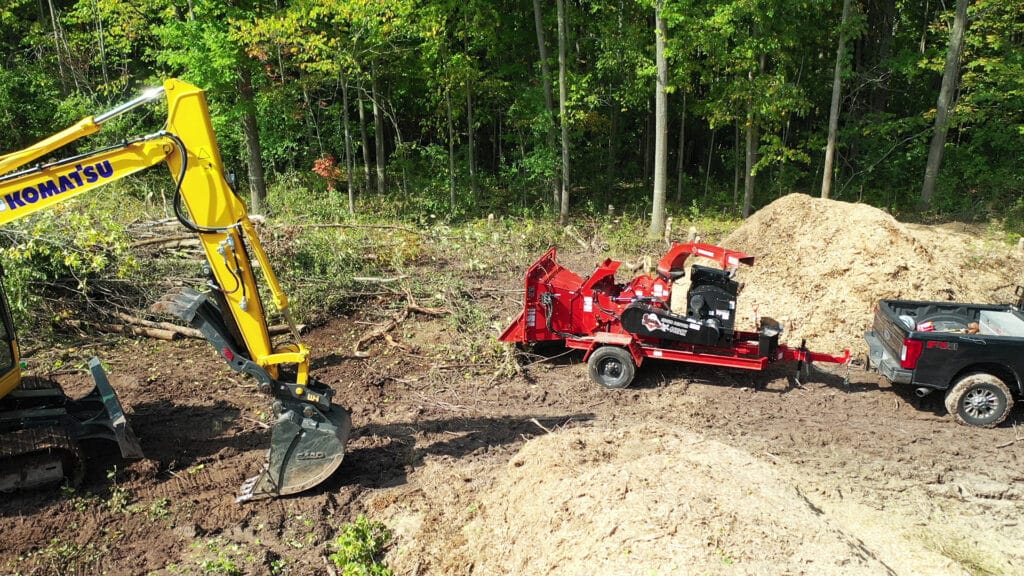
Wisconsin Land Management completed a site-clearing project in partnership with the local city arborist, demonstrating our commitment to environmental responsibility, precision, and collaboration. Before breaking ground, our team ensured full compliance with city tree-preservation ordinances and prepared a thorough protection plan. In fact, experts note that well over half of U.S. communities now require tree preservation during development. We worked closely with the city arborist to submit all required tree-removal permits and to identify which trees could remain under local law. With the arborist’s guidance, we developed a clearing plan that adhered to the code, protected sensitive areas, and maintained open communication with municipal officials.
Collaboration with City Arborist and Specimen Tree Preservation
From the outset, we collaborated with a city arborist in WI, to locate and preserve specimen trees – those large, mature, or rare trees that local ordinances protect. Together, we walked the property to flag high-value trees that would remain untouched. Where needed, we created Tree Protection Zones (TPZs) around these and other healthy trees being retained. A TPZ is an area around a tree where construction activities (like storing materials, driving equipment, or stockpiling soil) are prohibited. By marking these zones with fencing and signage, we prevented soil compaction and root damage during the clearing process. This precision ensured that the retained trees, both specimen and healthy non-specimen, were shielded from machinery and could continue to thrive.

Retaining Healthy Non-Specimen Trees
In addition to specimen trees, we made every effort to keep other healthy trees on the property. Our crew delineated protection areas around these trees and avoided placing equipment or debris within their root zones. Best practices from urban forestry advise that properly implemented TPZs can allow trees to survive construction undamaged. We also performed careful pruning and crown work where needed, removing only branches that interfered with work while leaving the main canopy intact. Throughout the project, we communicated with the client to adapt the clearing plan in real time, ensuring that all valuable vegetation remained safe.
Removal of Dead Ash Trees (Emerald Ash Borer Management)
Many ash trees on the site had already been killed by the Emerald Ash Borer (EAB), an invasive beetle. Our team addressed these hazardous trees first. Wisconsin’s forestry guidelines emphasize that dead ash trees “quickly become public safety hazards” and should be removed immediately. Leaving them standing would risk sudden collapse onto people or structures, and would make removal much more difficult and costly. Following industry best practices, we fell each dead ash in sections using rigging and cranes when necessary. This controlled felling minimized the risk of limbs or trunks shattering. By removing the EAB-killed ash promptly, we protected the site and avoided the 2–3 times higher costs associated with waiting until the trees are entirely dead and brittle. All ash logs and branches were then chipped on-site or transported for proper processing, ensuring safe disposal of the infested wood.
Invasive Species Removal: Buckthorn and Honeysuckle
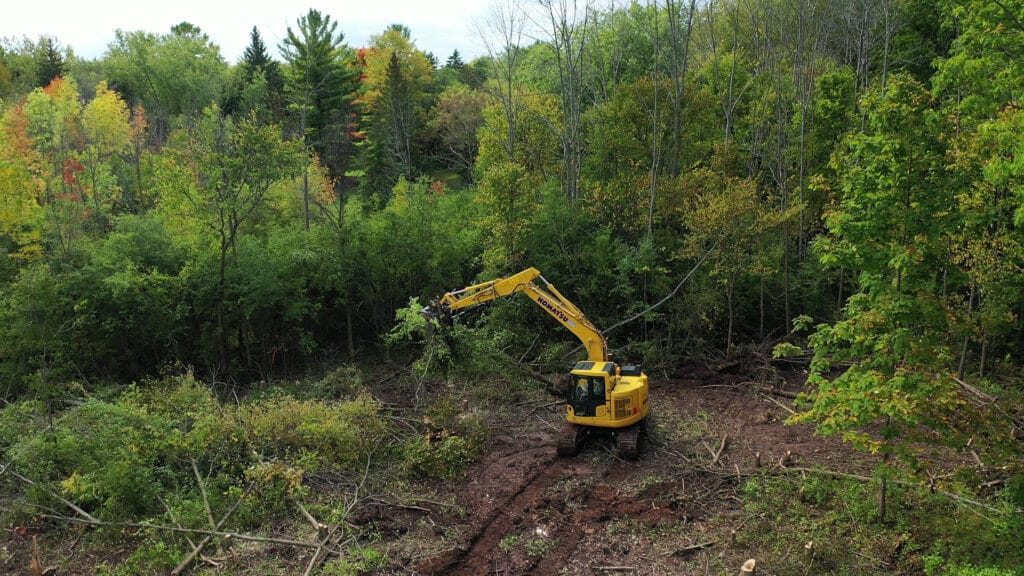
The site also contained stands of invasive buckthorn and bush honeysuckle. These non-native shrubs can spread aggressively, forming dense thickets that block sunlight and choke out native plants. As noted by the UW Arboretum, buckthorn and honeysuckle “can spread quickly and create dense thickets that block sunlight from reaching the ground,” preventing native wildflowers and grasses from surviving. To restore the property’s ecological health, our crew hand-cut and mechanically removed all buckthorn and honeysuckle stems. Whenever practical, we pulled or dug out the roots to prevent resprouting. In sensitive areas, we applied targeted herbicide treatments to cut stumps, ensuring long-term control. The removed brush was piled and covered in designated zones per invasive species control guidelines. By eradicating these invasive species, we cleared the way for native vegetation to reestablish and support the site’s long-term ecological integrity.
On-Site Mulching and Ecological Benefits
Where possible, wood debris from cleared trees and shrubs was chipped on-site and reused as mulch. (We took special care with invasive material: for example, any buckthorn or honeysuckle branches bearing seeds or berries were separated and removed so as not to spread those seeds.) The resulting wood-chip mulch was then spread around the preserved trees and other planting areas. Mulching in this manner recycles organic matter back into the soil and provides numerous ecological benefits, including:
- Moisture retention: The wood chips hold and slowly release water, reducing soil evaporation and helping plants stay hydrated.
- Weed suppression: A thick mulch layer blocks sunlight from reaching weed seeds, greatly reducing weed germination and growth.
- Soil temperature regulation: Mulch insulates the ground, keeping soil cooler in summer and warmer in winter, which is healthier for root systems.
- Erosion control: By covering bare soil, mulch protects against runoff and wind erosion, preventing nutrient loss and sedimentation.
- Nutrient addition: As the wood chips decompose slowly, they release organic nutrients back into the soil, enriching it over time.

These mulch benefits are well-documented: for example, experts note that wood-chip mulch “effectively retains and slowly releases moisture,” “moderates temperature,” and “provides weed control,” while resisting compaction and supporting soil microbes. By recycling debris on-site as mulch rather than hauling it away, we conserved resources and left the site in better ecological condition.
Final Grading and Stump Removal
After vegetation and debris removal, our final step was to grind the stumps and grade the site to prepare for construction. We ground out all remaining stumps to below grade and cleared the material, ensuring the ground was level and stable. Removing stumps is essential before building foundations or roadways, and it eliminates tripping hazards and future root rot problems. The cleared, mulched, and graded site is now ready for the next phase of residential development, with healthy trees retained and the soil enriched by organic mulch.
Wisconsin Land Management’s values of environmental responsibility and precision were on display throughout this project. By working hand-in-hand with the city arborist and our client, we exceeded regulatory requirements while preserving as much of the natural landscape as possible. Property owners, builders, and municipal partners can be confident that our team will handle site preparation with care, protecting trees, managing hazards safely, and enhancing ecological outcomes.
Ready for your next project? Contact Wisconsin Land Management today for expert site preparation and ecological land services. Our professionals will help you establish a solid, environmentally responsible foundation for your construction project.